 فارسی
 العربیه
 English


What Is the Success Rate of IVF?
There are several factors considered as strategies to increase the chances of IVF success. These factors can generally be categorized into five main groups, which are explained in detail below:
- Pre-IVF preparations
- Effective assisted techniques during the IVF process
- Post-IVF care and precautions
- The individual's age
- The fertility center and the specialist doctor
Pre-IVF Preparations
To increase the success rate of IVF, pre-IVF actions, lifestyle habits, and preliminary assessments are among the most important and influential factors. These aspects are discussed individually below:
1. Maintain a Healthy Lifestyle
- Maintaining a healthy weight, proper nutrition, sufficient sleep, and regular exercise is essential. Additionally, avoiding stress, smoking, and alcohol consumption are key elements of a healthy lifestyle.
- Maintaining a healthy weight is especially important for fertility and IVF success. It is known that being overweight (BMI > 35) or underweight (BMI < 19) can double or even quadruple the time it takes to conceive, and negatively impact the success rate of IVF. Excess weight can make it more difficult to monitor the ovaries during IVF and increases the risk of complications during egg retrieval. Achieving a healthy weight is possible through dietary changes and regular physical activity. Consulting a nutritionist and following a consistent exercise routine can help reach these goals.
- Follow a balanced diet. Do not make sudden changes to your diet; instead, introduce gradual improvements. Eat more proteins such as fish and chicken. Incorporate whole grains into your meals. Add legumes such as beans, chickpeas, and lentils to your diet. Choose low-fat dairy products. Make sure to include healthy fats like avocados, extra virgin olive oil, nuts, and seeds in your diet, and avoid sugar, refined grains, and other processed foods. Limit your salt intake and use herbs and spices to flavor your food instead.
- Get enough quality sleep.
- Reduce stress. Stress levels can affect your fertility. Reducing stress during the IVF process can be one of the most challenging tasks for couples. However, multiple reports suggest improved pregnancy outcomes when stress-reducing techniques and related workshops are used.
- Quit smoking. Smoking can lower the success rate of IVF by affecting both egg and sperm quality. Quitting smoking is not easy and often requires both personal and professional support. Try to ask your friends and family to encourage and support you on this journey.
2. Improve Sperm Health
- Using vitamins, maintaining an ideal body weight, and keeping the testicles cool improve sperm quality and can be beneficial for strengthening the body before IVF, thereby increasing the success rate of IVF. Under a doctor's supervision, it is possible to start taking medications that are effective in increasing sperm count and quality, which can have a positive impact on IVF success rates. It is also advisable to perform a semen analysis before undergoing the IVF procedure so that you can compare your partner's sperm quantity and quality with the levels required for IVF.
- Keep the testicles cool. The temperature of the testicles should be a few degrees lower than the body’s core temperature; therefore, avoid using jacuzzis, hot baths, steam rooms, and cycling, as research has shown that all of these activities reduce sperm quality. Drink plenty of water—aim for up to 2 liters per day. Dehydration is one of the most important factors that can negatively affect sperm quality. It is also essential to ensure adequate vitamin intake to meet all the nutritional needs required for healthy sperm.
Supplements to improve sperm quality
Consult a nutritionist regarding this matter. Sperm-boosting supplements include:
- Antioxidants: Free radicals float through the body and damage healthy cells, accounting for 40% of sperm damage. Antioxidants eliminate free radicals.
- Amino acids: These are the building blocks of proteins and are essential for the production of eggs and sperm.
- Vitamins A and B6: Necessary for the production of male sex hormones.
- Vitamin B12: Low levels may lead to abnormally shaped sperm, reduced sperm count, and decreased motility.
- Vitamin C: An antioxidant that protects against damage caused by free radicals.
- Selenium: Important for proper sperm formation and maintaining adequate sperm count.
- Manganese: Deficiency may result in testicular degeneration, congenital abnormalities, and a reduced sperm count.
- Zinc: Required for testosterone metabolism, testicular growth, sperm production, motility, quantity, and reducing excess estrogen in male reproductive tissues.
- Coenzyme Q10: Important for energy production. Fertility may increase while taking this supplement, and it also improves blood flow.
3. Monitor Egg Health
- L-Arginine, Omega-3, and CoQ10 are supplements that can positively impact IVF success rates by improving both the quantity and quality of eggs. Consult your doctor for guidance on taking these supplements.
- Multivitamins may also be beneficial. Make sure your body has sufficient levels of vitamin D. Over 40% of people are vitamin D deficient. There is evidence linking low vitamin D levels with infertility and poorer IVF outcomes. Ask your doctor to check your vitamin D levels and prescribe a supplement if necessary.
It is important to note that none of the supplements or foods discussed in this article should be used simultaneously with any IVF medications. This supplement and nutrition regimen should be completed before starting IVF drugs. Ideally, you can dedicate three months before starting medication to prepare your body with these supplements and a fertility-friendly diet.
4. Assess Uterine and Fallopian Tube Health Before IVF
Before undergoing IVF, the health of your uterus and fallopian tubes should be thoroughly evaluated. Some fertility centers routinely perform a hysteroscopy on every woman before starting IVF treatment, believing that removing polyps or scar tissue prior to the procedure can increase the chances of success. The importance of hysteroscopy before IVF has been confirmed in recent studies, which show that performing hysteroscopy after a failed IVF cycle is highly beneficial. These studies revealed that 25% of women who experienced failed IVF cycles had uterine abnormalities.
Additionally, certain reproductive system conditions such as endometriosis, polycystic ovary syndrome (PCOS), and chronic tubal infections (hydrosalpinx) can create an unsuitable uterine environment and interfere with embryo implantation and growth, ultimately preventing successful pregnancy through IVF. If a woman planning to undergo IVF has any of these conditions, it is recommended to treat or manage the issue through medication or surgery before proceeding with IVF to increase the chances of success.
5. Be Patient
Many patients require more than one IVF cycle to achieve a successful pregnancy, and results can vary from one cycle to another. If your first cycle is not successful, your doctor may be able to adjust the medications or use complementary techniques to improve the outcome of the next round.
Overall, it is recommended to do everything right, and the most important thing to remember is that many aspects of the process are beyond your control. Sometimes, letting go of worries can help you better endure the challenges. When things don’t go as planned, don’t blame yourself—you are not alone, and many couples are going through the same experience.
Effective Assisted Techniques During the IVF Cycle
In cases of repeated IVF cycle failures, some fertility specialists may use specific assisted techniques tailored to the individual's condition to help increase the chances of IVF success. Techniques such as endometrial scratching, egg hatching, and endometrial PRP are among the strategies employed to improve IVF outcomes.
Assisted Hatching
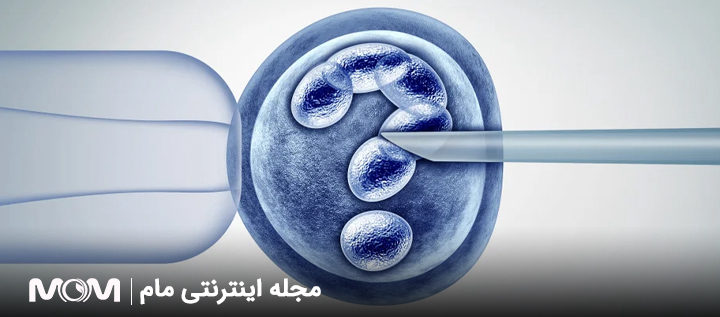
Assisted hatching is a laboratory technique sometimes performed alongside IVF. In this method, the outer shell of the embryo is artificially loosened by creating a small opening, which may enhance embryo implantation after transfer. This technique is used in cases of repeated implantation failure, elevated FSH levels, or advanced maternal age.
Endometrial PRP (Platelet-Rich Plasma)
Endometrial PRP is recommended for infertile women with a thin endometrium (less than 7 mm). Intrauterine PRP injection is a novel method for treating thin endometrium, especially when it has not responded well to medication. In this procedure, a sample of the woman’s blood is drawn and, in a laboratory setting, platelet-rich plasma (PRP) is separated and injected into the uterine cavity on day 10 of the cycle. If endometrial thickness does not increase after 72 hours, the injection is repeated. Once the endometrial lining reaches a thickness of more than 7 mm, embryo transfer can proceed. Studies have shown that PRP may promote endometrial growth and improve pregnancy outcomes in patients with a thin endometrial lining.
Endometrial Scratching
Endometrial scratching is another method used to increase the chances of IVF success. Recently, fertility centers have begun using this approach to boost implantation rates. The procedure is simple and resembles a Pap smear. It involves making a quick, superficial scratch in the endometrial lining (the inner wall of the uterus) using a specialized instrument, typically on day 21 of the menstrual cycle and before starting IVF medication. The scratch appears to trigger an inflammatory response in the uterus, causing white blood cells, growth factors, and specific biochemical substances to be released to aid in healing. These secretions are believed to play a key role in embryo implantation and development.
Post-IVF Care and Considerations
To improve the success rate of IVF, post-procedure care is one of the most critical and effective factors and should be strictly followed. These include avoiding swimming or soaking in a bathtub for 48 hours after embryo transfer, refraining from heavy or intense physical activity and exercise until pregnancy stability is confirmed, and following a diet that prevents bloating or constipation.
The chance of pregnancy in women at age 35 is 42% lower compared to women aged 20 to 24. From age 35 onward, a woman’s ability to conceive naturally decreases by 9% each year. After the age of 40, the likelihood of natural conception drops dramatically. By age 45, more than 95% of the remaining eggs in the ovaries have genetic abnormalities.
Similarly, age is a major factor influencing IVF success rates. The success rate of IVF in women at age 30 is 48%. This rate drops to 22% at age 40, 12% at age 43, 7% at age 45, and as low as 4% by age 47.
Combining IVF with preimplantation genetic screening (PGS) or preimplantation genetic diagnosis (PGD) is one approach that can increase the chances of implantation in older women. By genetically testing embryos in the lab before implantation and selecting only those without chromosomal abnormalities, this technique can boost implantation rates and reduce the risk of early miscarriage. Studies show that IVF success rates can increase by around 10% using this method.
Additionally, if ovulation is weak due to advanced age, ovarian reserve is low, or there is a history of prolonged and unsuccessful treatment, receiving donor eggs or embryos (depending on the couple’s fertility status) may be recommended. In IVF cycles using eggs or embryos donated by younger women, the age-related risk factor is essentially removed.
Given the importance of age in fertility, it is recommended that if you wish to postpone pregnancy for several years, you freeze your eggs or embryos before age 35.
Does IVF Work the First Time?
IVF is a challenging and time-consuming process, and in addition to all the physical and emotional demands, it also comes with significant financial costs. That’s why one of the most common questions among couples struggling with infertility is: Does IVF work the first time?
Unfortunately, not all couples are fortunate enough to achieve success with their first IVF attempt. Even in natural conception, when there are no fertility problems, not all fertilized eggs result in pregnancy. In fact, in each natural cycle, the chance of conception is only about 20–30%. Therefore, failure in IVF is not unusual, and it may take multiple attempts to achieve a successful outcome.
However, there are several measures that can help increase the chances of IVF success, which will be discussed in the following sections.
Choosing the Right Fertility Specialist and a Trusted IVF Center
In addition to selecting an excellent, experienced, and skilled fertility specialist to increase your chances of IVF success, you should also look for the best fertility center—one where you feel comfortable and supported. A reputable doctor and fertility clinic will accompany you on this emotionally challenging journey and provide you with a sense of reliable support throughout the process.