 فارسی
 العربیه
 English

Blighted Ovum (Anembryonic Pregnancy)
My pregnancy test was positive, a gestational sac had formed, but there was no embryo…!
Pregnancy is often a period filled with hope and excitement for expectant mothers. However, sometimes the development of the embryo does not align with the expected progression of pregnancy. One such condition occurs when a gestational sac forms, but the embryo does not develop. This type of pregnancy is called a blighted ovum, and it is one of the most common causes of miscarriage in the early weeks of pregnancy.
In this article from Mam Online Magazine, we will explain in clear and scientific language what a blighted ovum is, why it happens, and how to cope with it. If you or someone close to you has experienced this, understanding these points can be reassuring and help you move forward with more clarity.
What Is a Blighted Ovum?
A blighted ovum, also known as an anembryonic pregnancy, occurs when a fertilized egg implants in the uterus but does not develop into an embryo. Under normal circumstances, the fertilized egg attaches to the uterine wall and the embryo begins to form around five to six weeks afterward. A blighted ovum happens when implantation occurs, but the embryo fails to develop. This condition can be the main cause of early pregnancy loss or miscarriage.
In a blighted ovum, the growth of the fertilized egg stops, but the gestational sac — where the embryo is meant to grow — continues to enlarge. The placenta and empty gestational sac, even without an embryo, release pregnancy hormones. This means that beta-hCG levels rise in a blighted ovum, causing the person to experience early pregnancy symptoms and test positive on a pregnancy test.
What Causes a Blighted Ovum?
You may wonder who is more likely to experience a blighted ovum. The main cause is usually chromosomal abnormalities. These abnormalities may stem from poor-quality sperm or eggs, or from abnormal cell division. The body may recognize a genetic problem and naturally prevent the pregnancy from continuing.
It is essential to understand that a blighted ovum is not caused by anything the mother did or failed to do. It is not preventable in any way. Fortunately, in most cases, a blighted ovum occurs only once in a woman’s life.
Symptoms of a Blighted Ovum
A blighted ovum may occur so early in pregnancy that you may not even realize you were pregnant. In other cases, you may experience a missed period or have a positive pregnancy test along with early pregnancy symptoms such as breast tenderness and morning nausea. Although beta-hCG levels are elevated in a blighted ovum, they do not increase at a normal rate.
If a blighted ovum leads to miscarriage, you may experience:
Vaginal bleeding (ranging from spotting to light bleeding to passing blood clots)
Cramping in the pelvic and abdominal area
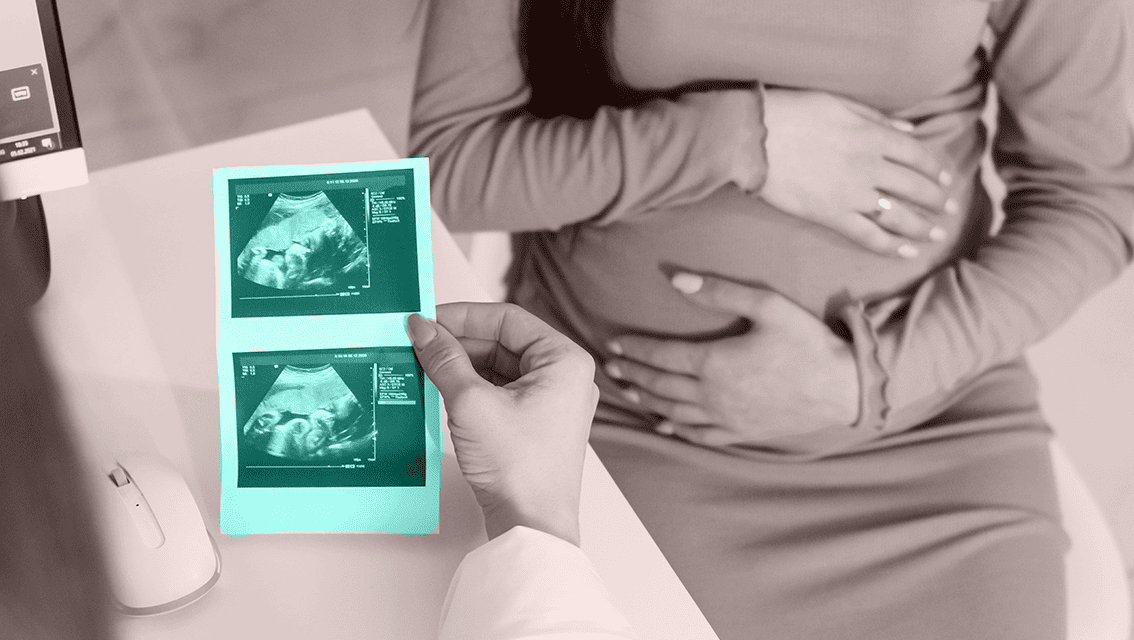
The symptoms of a blighted ovum are similar to those of a normal pregnancy, and the only way to confirm the diagnosis is through an ultrasound. Ultrasound imaging will show an empty gestational sac.
Risk Factors for a Blighted Ovum
Healthcare providers do not know exactly why chromosomal problems develop during the early stages of pregnancy and lead to a blighted ovum. However, some risk factors appear to increase the likelihood:
- Age over 35
- Having an underlying or uncontrolled medical condition or infection
- A history of miscarriage
Diagnosis of a Blighted Ovum
A physician diagnoses a blighted ovum using a transvaginal ultrasound. This typically occurs in the first trimester, usually between seven to nine weeks of pregnancy. At this stage, the embryo should normally be visible.
Beta-hCG levels can also help with diagnosis. In early pregnancy, blood levels of hCG rise rapidly and reach their peak around the eighth to tenth week. If these levels do not increase quickly or remain low, it may indicate a miscarriage or another complication. Your doctor may test your hCG levels over several days to determine whether they are rising. This can be an effective way to identify a blighted ovum.
How Long Does a Blighted Ovum Last?
The duration of a blighted ovum varies from person to person. The placenta, without an embryo, may continue to grow and release hormones. Sometimes, a miscarriage may occur just a few days after a positive pregnancy test. In other cases, the placenta continues to develop and produce hormones. This may last seven to twelve weeks after conception. At that point, the body realizes no embryo is forming, and the uterus expels the tissue it had prepared.
The timing of miscarriage in a blighted ovum varies for each individual. For some, no treatment is necessary because the body expels the tissue naturally through the vagina a few days after a positive pregnancy test (natural miscarriage).
If the pregnancy does not pass on its own, medication may be prescribed to stimulate the body to miscarry and eliminate the waiting period for a natural expulsion. An additional ultrasound may be performed to confirm that the uterus is empty. The physician will check for signs of infection and ensure there are no complications. If not all the tissue is expelled, other options are available to remove the contents of the uterus. Your doctor will discuss possible treatments with you, such as dilation and curettage (D&C).
Recovery After a Blighted Ovum Miscarriage
Recovery after a blighted ovum miscarriage or diagnostic curettage can take anywhere from one to two weeks up to a month. Cramping typically lasts for about a week, but bleeding can continue for several weeks. The bleeding should gradually become lighter until it completely stops.
You can resume normal activities when you feel comfortable. However, bleeding may increase with intense activity or exercise. Hormones may remain in your body and delay your menstrual cycle. Most people get their period within four to six weeks after a blighted ovum miscarriage.
Emotional recovery may take longer. You might experience sadness, anger, or confusion. It is perfectly okay to take time to grieve. Seek support from friends and family during recovery.
How Soon Can I Get Pregnant Again After a Blighted Ovum?
Most healthcare providers recommend waiting one or two menstrual cycles before trying to conceive again after any type of miscarriage. The chances of a healthy pregnancy after a blighted ovum are high, and most individuals who experience it go on to have a healthy, full-term pregnancy. If you experience more than one miscarriage, your healthcare provider may suggest genetic testing to determine whether there is an underlying cause.
Can a Blighted Ovum Be Prevented?
There is no way to prevent a blighted ovum. Some couples may choose to perform genetic testing on uterine tissue. This test can help identify the underlying causes of miscarriage and may be useful for couples who have experienced multiple miscarriages.
Blighted Ovum in IVF
Experiencing a blighted ovum or miscarriage during IVF (in vitro fertilization) is not more common. The likelihood of miscarriage with IVF is nearly the same as in a natural pregnancy.
Frequently Asked Questions About Blighted Ovum
Here are some frequently asked questions that may arise if you experience an anembryonic pregnancy:
How long does it take for a blighted ovum to pass?
If you do not have a D&C or take abortion medication, your body will recognize the pregnancy issue and empty the uterus within 7 to 12 weeks.
When can I get pregnant again after a blighted ovum?
It is usually recommended to wait at least two menstrual cycles after any type of miscarriage before trying to conceive again.
Can hormonal imbalance cause a blighted ovum?
Yes. Hormonal imbalances, such as low progesterone levels, can lead to a blighted ovum.
How can I prevent an anembryonic pregnancy?
A blighted ovum is usually unrelated to your health status. However, it is always beneficial to maintain good health by limiting alcohol and caffeine consumption and avoiding smoking.
In Conclusion…
A blighted ovum, also known as an anembryonic pregnancy, is very common. It occurs when a fertilized egg implants and the placenta begins to form, but no embryo develops. There is a strong association between poor egg quality and blighted ovum, and it is considered one of the main causes. Blighted ovum often happens before you even become aware of the pregnancy. Most individuals go on to have healthy pregnancies after experiencing an anembryonic pregnancy.